
by Tracy Byrne | Feb 23, 2026 | Producer Tips, Season Planning
Let’s be honest: reading a new script can feel like doing your taxes.
Most publishers send you these dense, tiny-print “tomes” that are written to be studied in a library. But you aren’t a librarian—you’re a director. If you’re wondering how to read a play script without losing your mind or your lunch break, here is the un-stuffy way to “skim with intent” and find the heart of a show in under 20 minutes.
1. Skip the Flowery Stage Directions
If a script starts with three pages describing the exact shade of the wallpaper and the way the dust motes dance in the light… skip it.
Those are “literary” stage directions. To find the pulse of the play, jump straight to the dialogue. Can you hear the characters’ voices? Is there a rhythm? If the dialogue doesn’t grab you within the first five pages, no amount of fancy wallpaper is going to save the show.
2. The “Page 15” Litmus Test
By page 15, someone should want something desperately, and someone else should be standing in their way.
If you get to page 15 and everyone is still just sitting around drinking tea and talking about the past, you’ve got a “pacing problem.” A great show needs clear stakes early on so your audience knows why they should care.
3. Look for the “Gasp” or the “Guffaw”
Flip through the script and look for the peaks.
-
Is there a moment that makes you lean forward?
-
Is there a line that makes you laugh out loud in an empty room?
-
Is there a visual beat that makes you think, “I know exactly how I’d light that”?
A script shouldn’t be a hurdle you have to climb over; it should be the fuel for your production. When it comes to script analysis for directors, you aren’t looking for deep metaphors on the first pass—you are looking for playability.
At TLC Scripts, we approach this differently. Our play catalog is designed for the “tired director”—our scripts are breathable, playable, and—most importantly—understandable from the very first read.
When it comes to choosing a play for community theater, you need a script that builds excitement, not exhaustion. If a script feels “stuffy” on the page, it’s probably going to feel stuffy on your stage. Now that you know how to read a play script with a director’s eye, you’re ready to find “the one.”
Ready to find a script that actually speaks your language? Check out our Play Previews here.
by Tracy Byrne | Feb 16, 2026 | Industry Insights, Producer Tips
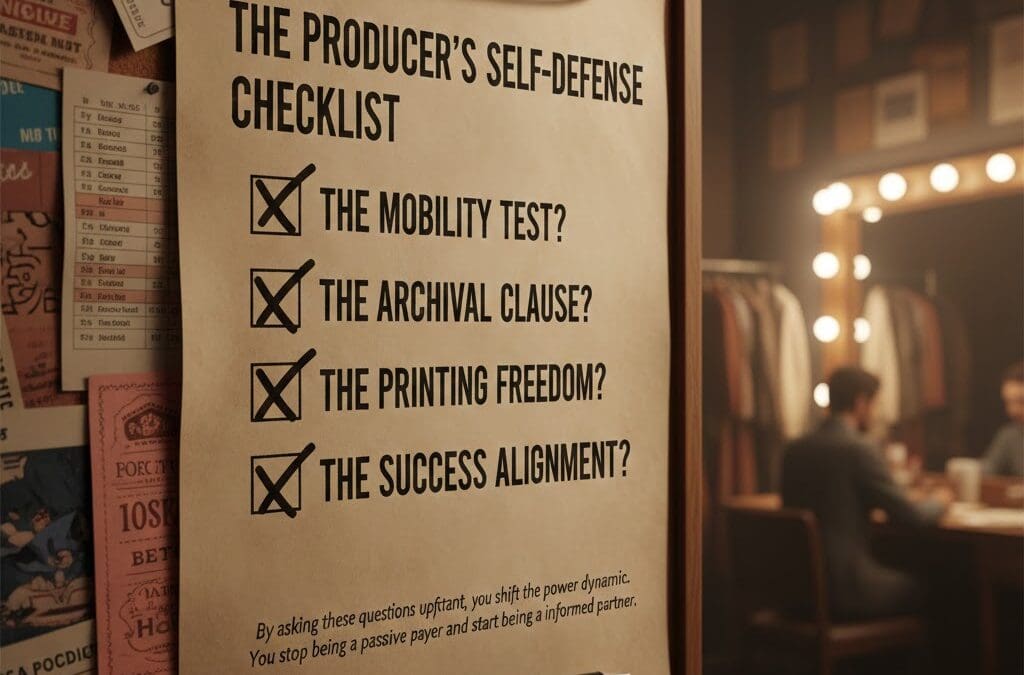
Before you sign your next licensing agreement, perform a “Ghost Audit” on your production. Use these questions to smoke out the hidden costs before they haunt your bottom line:
- The Mobility Test: Can I share this digital script with my guest designers and stage management team without paying an additional “Seat Fee”?
- The Archival Clause: Am I required to “destroy” my digital files after the show? (A partner house allows you to keep your production notes and marked scripts for your own archives).
- The Printing Freedom: Am I allowed to print exactly what I need on-site, or am I forced to buy overpriced physical books that I eventually have to ship back?
- The Success Alignment: Is the licensing house providing me with high-resolution marketing assets and digital masters, or am I on my own once the check clears?
By asking these questions upfront, you shift the power dynamic. You stop being a passive payer and start being an informed partner.
by Tracy Byrne | Feb 9, 2026 | Producer Tips, Theatre Management
You finally found it. You spent weeks reading scripts, humming through demo tracks, and weighing cast sizes. You found the show that fits your budget, your talent pool, and your audience. Your board is ready to vote, your director is inspired, and the energy is high. Then, you hit the button to apply for theatrical licensing rights…
And you wait…
and wait…
and wait…
For many community theaters and small professional companies, this is where the momentum dies. You’re stuck in “Licensing Limbo” for two weeks while a massive corporation checks “territorial restrictions” or waits for a manual review from a department that doesn’t know your theater exists.
The Cost of Waiting for Theatrical Licensing Rights
When you have to tell your team, “We’re waiting to see if we’re allowed to do the show,” you lose the window to book your performance dates, create your rehearsal schedule, start your marketing, or lock in your lead actors.
But in theater, securing your theatrical licensing rights isn’t just about logistics and money; it’s about morale.
When a creative team finally lands on the “perfect” script, there is a surge of collective energy. You can see the set in your head, the actors are already imagining their auditions, and the board is energized to sell the vision. But when you have to tell that team that the show is essentially “on hold,” you effectively put inspiration on ice.
Every day spent in “Licensing Limbo” drains that initial spark. You aren’t just risking your venue’s availability; you are risking the “buy-in” and availability of your volunteers and staff.
-
The “Why” evaporates: It’s hard to stay passionate about a project that is currently a “maybe” in a corporate database.
-
The Pivot Fatigue: If the answer comes back as a “No” after three weeks of waiting for play rights, your team has to start the entire emotional climb over again with a second-choice script.
-
The Stagnation: Theater people are “doers.” Making them sit on their hands while a bureaucrat checks a map is the fastest way to turn a passion project into a chore.
The TLC Difference: Fast Play Licensing
At TLC Scripts, we approach theatrical licensing rights differently. When you reach out about a script, you aren’t hitting a faceless database that’s quietly checking to see if a professional house in the next county wants “first rights” over you.
Large corporations often hold your application in limbo while they protect their biggest clients or wait for a national tour schedule to be finalized. At TLC, we don’t have a “pecking order.” We own our catalog outright, which means we don’t have to “check with an estate” or wait for a third-party legal team to clear a zip code.
Our standard is fast play licensing with a 48-hour turnaround. We believe a 100-seat community theater deserves the same respect and speed as a 1,000-seat professional house. We want our scripts on your stage, not sitting in a “pending” folder while a bureaucrat waits for a “better” offer.
Don’t let a slow bureaucracy dictate your production schedule. If you’re tired of the waiting game for theatrical licensing rights, it might be time to look at a catalog that moves at the speed of live theater.
by Tracy Byrne | Feb 2, 2026 | Producer Tips, Theatre Management
The Dead Weight of the Old Guard
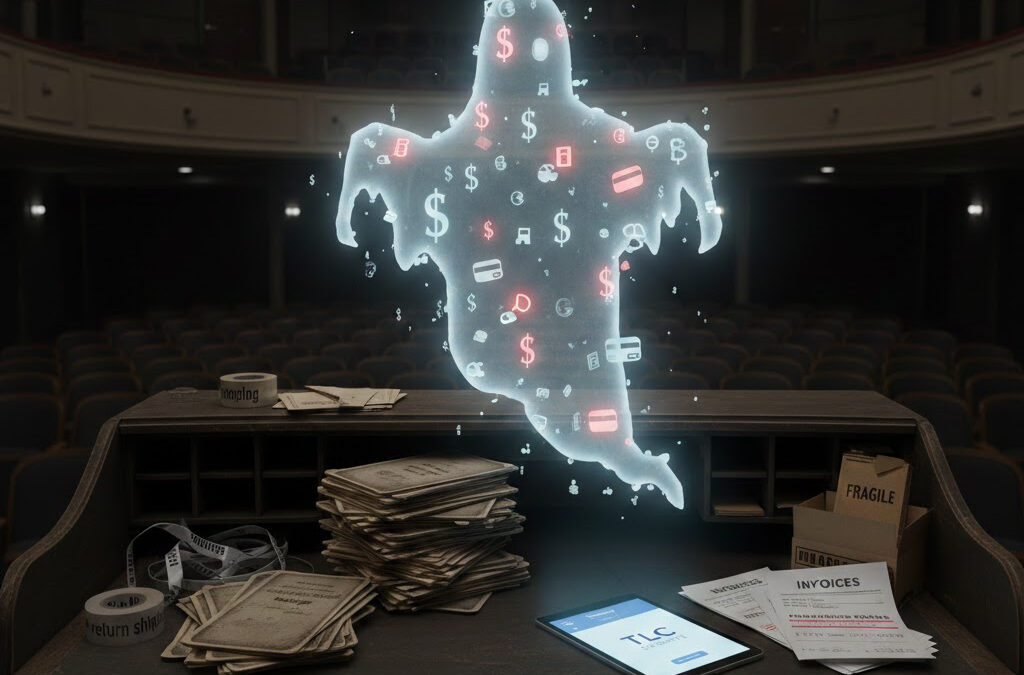
Every producer knows the “Big Three”: Venue, Insurance, and Royalties. These are the fixed stars you navigate by. But there is a ghost in your budget that most producers don’t see until the final reconciliation. It is the invisible friction of the “Traditional” script model—a system designed for a world that no longer exists.
When you license from the legacy houses, the royalty is often just the cover charge. The real “Ghost” is the secondary economy of logistics. You pay for script rentals. You pay for shipping. You pay for the “privilege” of returning those scripts by a deadline. If a script is lost or a page is marked in ink, the “security deposit” vanishes. This isn’t just a cost; it is a liability. It is a system that views the producer not as a creative partner, but as a temporary custodian of paper.
The Digital Surveillance State
Even as the industry moves toward digital materials, the legacy model has mutated into something even more restrictive: The Surveillance Model. Many publishers now track their PDF files with a level of jealousy that borders on the absurd. They have replaced the “Shipping Fee” with the “Access Fee.”
In 2026, we see publishers charging per-cast-member download fees. If you have a cast of twenty, you pay twenty times for the exact same digital file. Some go further, utilizing proprietary apps that prevent you from sharing a script with your Lighting Designer or a guest Stage Manager without “authorization.” They use digital watermarking to track your files like evidence in a criminal trial. You are paying for a script you never truly own, under a contract that requires you to “destroy” your digital history the moment the curtain falls.
The Freedom of the Digital Master
The industry is long overdue for a shift toward Production Autonomy. The solution isn’t just “digital files”—it is the “Digital Master” model. By removing physical rentals and per-user gatekeeping, we can finally kill the hidden costs that haunt a production.
A Digital Master model is about more than just saving on shipping. It is about Operational Velocity.
- Zero Latency: Your actors have scripts on their devices the second the show is cast.
- Zero Liability: No return deadlines, no “lost book” fees, and no shipping-related stress.
- Print-to-Need: You print only what you need, for who needs it, without asking for permission.
From “Permission” to “Partnership”
The theater world is expensive enough. Producers should not be made to feel like they are “renting” their creative vision from a landlord. You shouldn’t be penalized for being efficient.
We need to stop accepting the “Ghost Fees” as a necessary evil. It is time for a licensing model that trusts the producer, respects the budget, and treats the script as a tool for success rather than a monitored asset. Wouldn’t it be nice to finally find a licensing partner instead of just another licensing house?
The Parasite vs. The Partner
The Revenue Myth
The big houses defend these fees as “revenue maximization.” They claim that every digital watermark and shipping surcharge is necessary to protect the bottom line. But this is a hollow defense. They are failing to account for—or simply ignoring—the fact that their customers are at a breaking point. By nickel-and-diming the very theaters that keep them in business, they are slowly killing the industry that feeds them.
It is a parasitic relationship. When a licensing house prioritizes a $50 “access fee” over a theater’s ability to survive another season, they are trading their future for a rounding error.
The Incentive Alignment
Imagine a different model. What if a licensing house stopped focusing on “access” and started focusing on Impact?
In a partner-based model, the income of the licensing house is tied to the success of the show—not the number of PDF downloads. The math is simple: if the theater makes money, the licensing house makes money. When a partner is invested in the # of seats sold and the # of performances planned, their goal shifts. They are no longer a gatekeeper; they are an advocate.
A true partner doesn’t just send a script and a bill. They provide the marketing tools, the digital masters, and the strategic support to ensure the house is full. Why? Because a full house on a third weekend of a run is worth more to a licensing house than a thousand “shipping and handling” fees. By removing the “Ghost” costs, you allow the theater to reinvest that money into the production itself—better sets, better costumes, better marketing—which in turn draws a larger crowd.
The Multiplier Effect
When the Licensing House goes “all in” on the theater’s success, they create a multiplier effect. A theater that isn’t being bled dry by hidden fees is a theater that can afford to take risks on new shows. They can afford to license more frequently. They can afford to grow their audience.
The legacy model is based on scarcity and control. The future model is based on scale and success. It is time to stop paying the ghosts of the past and start investing in the partners of the future.
The Symbiosis of Success
The ultimate irony of the legacy model is that by trying to squeeze the producer, the licensing house is actually limiting its own payday. Every dollar spent on a “shipping fee” or a “digital download surcharge” is a dollar that cannot be spent on the production itself.
When a theater is freed from these predatory costs, they have more than just a balanced budget—they have options. A theater that can actually afford its production is a theater that has the confidence to add more performance dates. And this is where the true symbiosis begins.
In a partnership model, the licensing house wins when the theater wins. If a show is a hit and the producer adds a second or third weekend because the “Ghost Fees” didn’t kill their margins, the royalties for those extra performances go directly to the licensing house. It is a virtuous cycle: the LH provides the tools for success, the theater uses those tools to sell more seats, and both parties walk away with a larger, more sustainable profit.
The industry must move from a state of confrontation to a state of collaboration. We should be working together to fill every seat, not fighting over the cost of a PDF. When the licensing house stops acting like a toll collector and starts acting like a stakeholder, the entire theater ecosystem flourishes.

by Tracy Byrne | Jan 26, 2026 | News, The TLC Story & Philosophy
The Legacy of the Craft: The Story Behind TLC Scripts
In the theater licensing industry, it is easy to feel like an account number in a corporate ledger. Many large houses are massive entities where scripts are treated as inventory and contracts are handled by departments you will never see. At TLC Scripts, we choose a different path. We were created by theater people, for theater people, and we remain a family-owned and operated workshop to this day.
The Visionary and the Architect
TLC Scripts began with a rare and powerful creative friction. Judie Sapperstein is the foundational heart of the company. Beginning in 1981, she worked as an actor, director, and producer at the historic Keswick Theatre in Glenside, Pennsylvania. Judie did not just produce shows for its 1,300-seat house; she was a central figure in the fight to save this authentic 1920s theater from demolition, ensuring it remained a sanctuary for the arts rather than a shopping mall. This is also where she got her first taste of playwriting, when she got the call: “Bring your typewriter, we need to write a musical that we have to perform in this upcoming season.”
This deep-rooted commitment to the stage is matched by an uncanny, almost supernatural ability to hear the internal music of a story. Judie does not just write scripts; she hears the symphony in her head before a single note is played. Her creative intuition often defies the rules of formal education. In the development of the musical Bloomin’, Judie insisted on a four-part operatic arrangement that challenged standard musical theory. While Gary Murway, a traditionally trained, decades-long professional in music production, argued that the piece should not work based on formal logic, Judie stood her ground. When the music was finally brought to life, the result was breathtaking. Judie provides the soul, the depth, and the instinct that ensures every TLC script transcends the expected.
The Convergence of Excellence
Gary Murway brings the technical world of professional music to the partnership. Having spent decades touring, recording, and arranging in major studios, he acts as the architect who captures and refines Judie’s logic-defying visions. When they reunited creatively in 2007, they brought these two worlds together: Judie’s soaring, intuitive theatrical voice and Gary’s masterful understanding of emotional pacing and studio-grade production. This partnership creates works that community theaters can actually produce without ever sacrificing intelligence, humor, or heart.
A Family Workshop with a Purpose
We function with the focus of a specialized workshop. While Judie and Gary lead the creative development, Tracy manages the producer’s experience. Raised in the wings of the theater, Tracy has spent her life performing, directing, and stage managing. Since 1989, she has also built a professional career in commercial printing, marketing, and web development.
This rare combination of theatrical education and technical expertise gives our team a practical lens that most legacy houses simply do not possess. When you hold a TLC script, you are holding a tool designed for the “trench work” of production. We obsess over page turns, readable fonts, and digital masters because we have lived the reality of the stage manager printing scripts on a tight deadline.
Raised in the Wings
Theater is our family language. For Tracy, the “trench work” of the arts began long before she held a director’s title. At twelve years old, she was already backstage at the Keswick, a direct participant in the events Judie orchestrated to save the theater. She marched in parades to drum up community support and funding, eventually landing on the front page of the local entertainment section—decked out in sequins alongside other regular actors—all to ensure the wrecking ball stayed away from their stage.
That early immersion in the fight for authentic spaces shaped her world. As a single mother for twenty years, Tracy raised her own children with her mother, Judie, by her side, ensuring the performing arts remained at the center of the family. Today, that journey continues into a third generation. Tracy’s son, Evan, is a professional tenor opera singer in Europe. Her daughter, Hannah, is a powerhouse singer and actor who is now raising her own children in the arts as well.
Gary Murway, while not related by blood, has been “Uncle Gary” to the family for decades. As Judie’s creative partner and best friend, he remains a pillar of both our family and our business. This multi-generational perspective reinforces our mission: we do not view community theater as a “lesser” tier. It is the foundation where performers discover who they truly are.
The Human Side of Licensing
Being family-run means our work is personal. There is no corporate buffer between our team and your production. When you contact us, you are speaking to people who know these scripts and care about the success of your show.
Our sales lead, Bryan Lesnick, embodies this approach. As a theater educator and director, he understands the pressure of a season. At the end of the day, TLC Scripts exists to serve the work and the people producing it. We are a family of artists dedicated to helping your theater thrive in the Human Frontier.