
by Tracy Byrne | Mar 30, 2026 | Industry Insights, Producer Tips
Short Feature / Strategic Advice
Every Artistic Director knows the “Safety Trap.” It is the urge to program the same five blockbuster titles that have filled seats since 1975. The logic seems sound: these names have brand recognition. But in the era of the “Human Frontier,” that brand recognition has a shelf life. When an audience can predict every line of a play before the curtain rises, the “Living Proof” starts to feel like a rehearsal.
The Boredom of Repetition
The difficulty many community theaters face in filling seats today may have less to do with “losing people to screens” and more to do with the repetition of the familiar. We have spent fifty years recycling the same catalog. This has created a “Creative Echo Chamber” where the energy is low because the discovery is gone.
If you want a new era of theater, you need a new energy. And that energy is currently locked away in the “Playwright’s Prison.”
The Competitive Edge of the Obscure
While the legacy licensing houses spend all their marketing dollars on their “A-List” titles, their vaults are filled with “The Obscure”—fresh, powerful, high-impact works that have never been seen in your zip code. These are the scripts written by authors who aren’t being marketed, who are trapped in exclusive contracts with houses that are too busy selling Annie to notice them.
For the savvy producer, this is your secret weapon. When you find a “Hidden Gem” in the deep catalog, on a partner-based platform, or better yet, in an independent boutiques catalog, you are offering your community something they cannot get anywhere else:
- The “First-to-See” Factor: You aren’t the third theater this year to do the show; you are the first.
- The Promotional Power of “New”: It is much easier to create “Buzz” around a world-premiere or a regional premiere than it is to market a show everyone has already seen.
- The Authentic Connection: New works are often more attuned to the “Human Frontier” of 2026 than a play written for a different century.
The Call to Innovation
Stop looking for the “Safe” choice. In 2026, “Safe” is synonymous with “Invisible.” Dig into the catalogs. Hunt for the playwrights who are doing the work but lack the “Famous” label. Look for the stories that challenge your actors and surprise your audience.
The future of community theater isn’t in the repetition of the past; it is in the discovery of the new. It is time to unlock the prison, find the hidden gold, and give your audience a reason to start feeling again.

by Tracy Byrne | Mar 23, 2026 | Industry Insights, Producer Tips
For the emerging playwright, signing with a major licensing house feels like the ultimate validation. You’ve spent years honing dialogue and workshoping scenes, and finally, a legacy house wants your work in their catalog. You sign the contract, celebrate, and wait for the royalties to roll in.
Then, the silence begins.
The Illusion of Representation
The “No-Smoke” reality of the legacy model is that for 95% of the writers in their catalog, the house provides storage, not sales. Unless your name carries the weight of a Tony Award, you aren’t a client, you are a line item. You are “content” used to pad out a database so the house can claim the largest selection in the world. To them, a script that never sells is still an asset because it prevents a competitor from having it.
The Rights Vault & The Multi-Year Trap
In exchange for this “prestige,” you often sign away exclusive rights for five, ten, or even twenty years, legally tethering your work to a vault. These contracts are designed to protect the house, not the creator. If a director happens to find you while searching a specific genre, the house takes their cut. But if they don’t? Your play sits on a digital shelf, gathering virtual dust, while you are legally barred from taking it elsewhere to find a true champion. They aren’t “selling” your work; they are holding it hostage.
Catalog Bloat: The Search Engine Problem
Legacy houses brag about having thousands of titles. But for a playwright, “thousands” is a nightmare. In a sea of 5,000 scripts, how does a middle-school drama teacher or a regional artistic director find yours? Without active internal advocacy from the house, your script is buried by the algorithm in favor of the “Big Names” that require zero effort to sell.
The Path Forward
A script shouldn’t be an asset that is locked away; it should be a tool that is actively deployed. Playwrights deserve partners who are incentivized to move their work, not just warehouse it. In all honesty, if a licensing house isn’t actively helping you get on a stage, they shouldn’t be standing in your way. It is time for a model where representation actually means being seen, not just being filed.

by Tracy Byrne | Mar 16, 2026 | Industry Insights, Producer Tips
The Gatekeeper’s Catch-22
In the modern theater landscape, a silent barrier stands between the creator and the stage: the institutional requirement of “representation.” Many regional and professional theaters maintain strict internal policies that refuse to even open a script unless it arrives via a recognized licensing house. They use these logos as a shorthand for quality control, effectively outsourcing their literary department’s vetting process. This creates a brutal Catch-22 for the emerging writer. You are forced to surrender your rights to a legacy house just to be considered “viable,” even if that house has no intention of actually picking up the phone to pitch your work.
The “Do-It-Yourself” Paradox
Once that logo is on your title page and your script is “represented,” the real work begins, and you’re still the one doing it. This is the DIY Paradox: you have a partner on paper, but you are still 100% responsible for the hustle. You are the one cold-calling artistic directors, stalking literary managers on LinkedIn, and paying out of pocket to mail perusal scripts. You are building the “buzz” and generating the leads through sheer force of will.
The Administrative Tax on Hustle
The “No-Smoke” reality of this model is that the licensing house isn’t a sales team; they are a toll booth. When your independent, tireless efforts finally result in a production, the house, which may have ignored your emails for months, emerges to claim the lion’s share of the revenue. They aren’t selling your work; they are taxing your initiative. They provide a basic PDF hosting service while charging “administrative fees” that can bleed a small community production’s budget dry before the first rehearsal. In this system, the middleman doesn’t just take a cut; they grow fat on the “administrative spread” while the playwright and the producer do the heavy lifting.
The Rise of the Symbiotic Model
The solution to the “Prison” model isn’t just to work harder; it’s to change the nature of the partnership. We are seeing the emergence of “Symbiotic Licensing,” where the success of the house is tied directly to the growth of the production. In this model, the licensing house doesn’t just “hold” rights; they activate them. This is the path we chose when establishing our own family-owned licensing house; not to build another massive, uncurated catalog, but to prove that a “Vessel” model actually works for the modern stage.
The Producer’s Advantage
When a licensing house operates as a partner rather than a landlord, the entire ecosystem shifts. Instead of “Ghost Fees” and administrative friction, the producer receives high-quality marketing assets and social media kits designed to actually sell tickets. The house becomes an extension of the theater’s own marketing team.
by Tracy Byrne | Mar 2, 2026 | Industry Insights, Producer Tips
Choosing a Season That Survives the Real World
Choosing a season is not an act of curation; it is an act of Strategic Alignment. You are balancing the artistic hunger of your company against the cold math of your bank account. In the “Decision Trench” of late spring, the pressure is on to pick “winners.” But a winner isn’t just a good story. A winner is a show that balances technical reality with human engagement.
Here is how to cut through the noise and build a season that actually performs.
1. The Ten-Second Vitality Test
Before you read the first page of a script, ask yourself: “Can I explain why this matters right now in ten seconds?” If the story is too complex for a poster headline or a single social media post, your marketing team is already defeated. In 2026, you aren’t just competing with other theaters; you are competing with the “Infinite Scroll.” You need a “Hook”—a clear, compelling reason for someone to put down their phone and enter your world. If you can’t pitch it to a stranger in a grocery line, don’t put it on your stage.
2. The “Vision vs. Connection” Audit
This is where you must be brutally honest: Is this show chosen to satisfy a personal “Director’s Vision,” or is it chosen for Audience Engagement?
There is a fine line between artistic passion and creative isolation. We often see shows chosen because an actor has a “dream role” or a director wants to satisfy a specific aesthetic itch. While passion is the engine of theater, it cannot be the only navigator. Your audience is your primary partner in the room.
If your season doesn’t live in the “Sweet Spot” where your team’s vision overlaps with the audience’s craving for truth and entertainment, you aren’t producing a season—you are hosting a private party. Your ego doesn’t guarantee their interest. The most successful productions are those that treat the audience’s enjoyment as a sacred responsibility, not an afterthought.
3. The “Labor-to-Impact” Ratio
Every script has a cast list, but few are honest about the Invisible Labor required. To maximize your budget, look for scripts designed with “Tactical Flexibility.”
- The Power of Doubling: Look for shows that allow actors to play multiple roles. This does more than save on costume budgets; it creates a “Virtuoso” experience for the audience. Watching a performer transform three times in two hours is the kind of “Human Feat” that AI cannot replicate.
- Technical Robustness: Be honest about your architecture. If a script requires a flying rig and you have twelve-foot ceilings, you are buying a nightmare. Seek out “Stage-Agnostic” scripts—works that are powerful enough to succeed on a bare stage but have the “bones” to support high-end production value if the budget allows.
- The Living Collaborator: Whenever possible, seek out works where the playwright is still alive and accessible. Unlike the “Classics” written by people who have been dead for a century, a living playwright is a dynamic asset. Many are eager to work with you to adapt a script to fit your specific stage dimensions, your technical limitations, or the unique needs of your community. This turns a static document into a living collaboration, ensuring the show fits your “Real World” constraints perfectly.
4. The “Safe Classic” Fallacy
The biggest risk you can take in 2026 is being “Safe.” The “Classics” are often used as a crutch for theaters that are afraid to talk to their audience about the modern world. But “Safe” is often synonymous with “Invisible.”
Your patrons don’t want a museum piece; they want to be surprised. They want stories that reflect the “Human Frontier” they are currently navigating. Do not be afraid to swap a tired “Standard” for a “New Classic” that offers a fresh perspective. Your audience’s loyalty isn’t built on what they’ve seen before; it’s built on the thrill of what they are seeing for the first time.
5. The “Word of Mouth” Engine
Finally, ask: “Will they talk about this at dinner?” The best marketing isn’t a poster; it’s a conversation. If the script doesn’t provoke a question, a laugh, or a debate that lasts into the car ride home, it has failed. Choose works that have “Teeth”—stories that demand to be discussed.

by Tracy Byrne | Feb 23, 2026 | Producer Tips, Season Planning
Let’s be honest: reading a new script can feel like doing your taxes.
Most publishers send you these dense, tiny-print “tomes” that are written to be studied in a library. But you aren’t a librarian—you’re a director. If you’re wondering how to read a play script without losing your mind or your lunch break, here is the un-stuffy way to “skim with intent” and find the heart of a show in under 20 minutes.
1. Skip the Flowery Stage Directions
If a script starts with three pages describing the exact shade of the wallpaper and the way the dust motes dance in the light… skip it.
Those are “literary” stage directions. To find the pulse of the play, jump straight to the dialogue. Can you hear the characters’ voices? Is there a rhythm? If the dialogue doesn’t grab you within the first five pages, no amount of fancy wallpaper is going to save the show.
2. The “Page 15” Litmus Test
By page 15, someone should want something desperately, and someone else should be standing in their way.
If you get to page 15 and everyone is still just sitting around drinking tea and talking about the past, you’ve got a “pacing problem.” A great show needs clear stakes early on so your audience knows why they should care.
3. Look for the “Gasp” or the “Guffaw”
Flip through the script and look for the peaks.
-
Is there a moment that makes you lean forward?
-
Is there a line that makes you laugh out loud in an empty room?
-
Is there a visual beat that makes you think, “I know exactly how I’d light that”?
A script shouldn’t be a hurdle you have to climb over; it should be the fuel for your production. When it comes to script analysis for directors, you aren’t looking for deep metaphors on the first pass—you are looking for playability.
At TLC Scripts, we approach this differently. Our play catalog is designed for the “tired director”—our scripts are breathable, playable, and—most importantly—understandable from the very first read.
When it comes to choosing a play for community theater, you need a script that builds excitement, not exhaustion. If a script feels “stuffy” on the page, it’s probably going to feel stuffy on your stage. Now that you know how to read a play script with a director’s eye, you’re ready to find “the one.”
Ready to find a script that actually speaks your language? Check out our Play Previews here.
by Tracy Byrne | Feb 16, 2026 | Industry Insights, Producer Tips
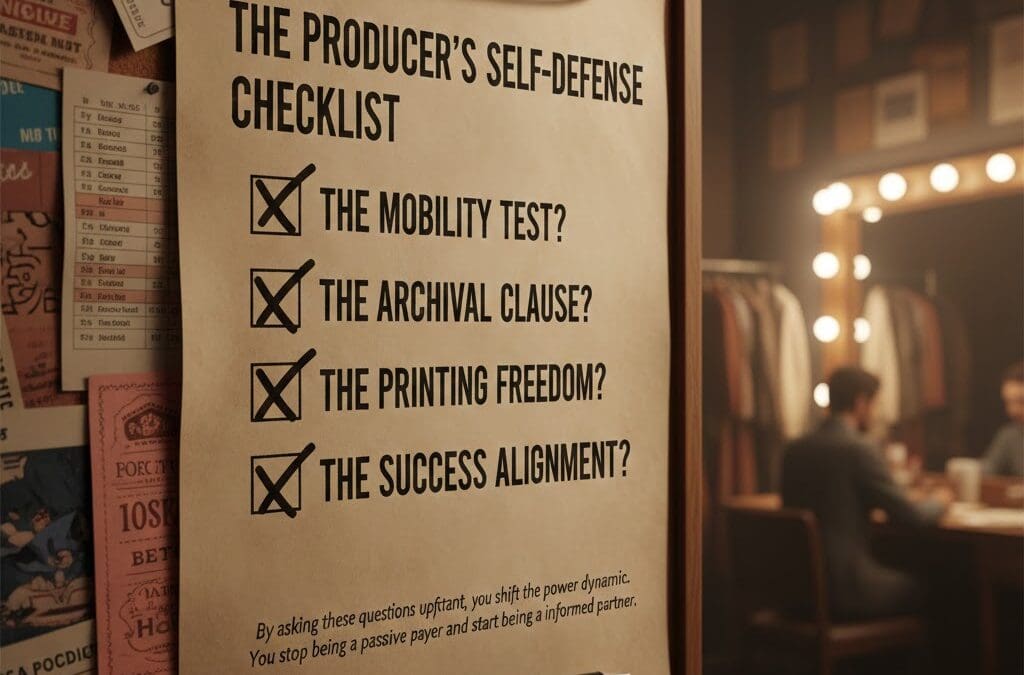
Before you sign your next licensing agreement, perform a “Ghost Audit” on your production. Use these questions to smoke out the hidden costs before they haunt your bottom line:
- The Mobility Test: Can I share this digital script with my guest designers and stage management team without paying an additional “Seat Fee”?
- The Archival Clause: Am I required to “destroy” my digital files after the show? (A partner house allows you to keep your production notes and marked scripts for your own archives).
- The Printing Freedom: Am I allowed to print exactly what I need on-site, or am I forced to buy overpriced physical books that I eventually have to ship back?
- The Success Alignment: Is the licensing house providing me with high-resolution marketing assets and digital masters, or am I on my own once the check clears?
By asking these questions upfront, you shift the power dynamic. You stop being a passive payer and start being an informed partner.